Why You Need Leadership Training and Where to Get It

“A true leader has the confidence to stand alone, the courage to make tough decisions, and the compassion to listen to the needs of others. He does not set out out be a leader, but becomes one by the equality of his actions and the integrity of his intent. “
– Douglas McArthur
leaderquote

Leadership makes a difference. Maybe its your little league team mates that rally behind the third base man because of his third grade charisma. Maybe its that college professor you had that taught lessons “outside the box” and opened your eyes to a new way of seeing. Perhaps it was that Master Sergeant that trained you and your team how to prioritize and organize your actions for mission success. Maybe leadership strikes much closer, in the home, as you model the kind of integrity and behavior a grown man or woman should have for your children. No matter where you look, leadership makes a difference.

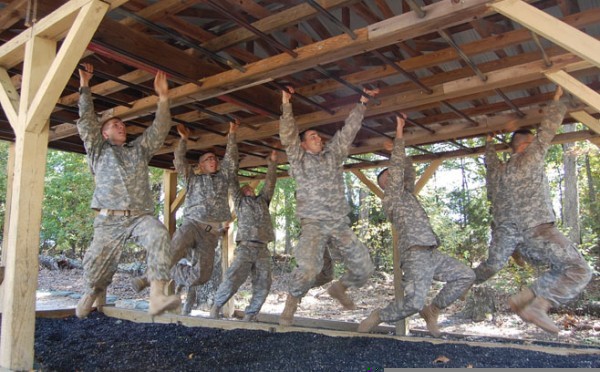
Leadership makes a difference. Not everyone can be a successful leader, at least not in every instance. One thing that all five branches of the military teach is that effective leadership can be trained. For more than two hundred years the military of the United States has been developing, honing, and deploying methods of leadership that have resulted in the finest military the world has known to date. Those who leave military service with strong leadership training go on to adapt their leadership skills to civilian life. Companies who hire these veterans with strong leadership skills benefit greatly from having them in their organization, but that is another article.
120314-A-DQ783-028

Like all successful companies and organizations you are looking for strong leadership in your company and that comes from quality leadership training.

Companies and organizations regularly seek out leadership training for:

  • Senior management
  • Mid or lower management
  • Corporate executives
  • Departments or teams
  • Team leaders

What is effective leadership training?

Leader development refers to enhancing leadership effectiveness, both at the individual and organization as a whole. Leadership development activities range from MBA style programs offered at university business schools to action learning, high-ropes courses and executive retreats.

Traditionally, leadership development has focused on developing the leadership abilities and attitudes of individuals. Just as people are not all born with the ability or desire to play sports, not all people are natural born leaders. Different personal traits and characteristics can help or hinder a person’s leadership effectiveness and require formalized programs for developing leadership competencies. Everyone can develop his or her leadership effectiveness which takes focus, practice and persistence more akin to learning a musical instrument than reading a book.

Classroom-style training and associated reading is effective in helping leaders to know more about what is involved in leading well. However, knowing what to do and doing what you know are two very different outcomes. It is estimated that as little as 15% of learning from traditional classroom style training results in sustained behavioral change within the workplace.

Why is it important to you?

Simply put, leadership training gives you

  • Substantive measurable results
  • Boosts performance
  • Higher quality mission execution
  • Boosted morale and motivation
  • Implementation of proven best practices for leadership
  • Quality training from highly experienced trainers

If your leadership training program does not boost performance, execution and motivation then you have the wrong form of leadership training in place. Quality leadership training will boost performance, quality of execution and motivation. Military influenced leadership training can employ best practices that have been developed over a very long period of time by the military. Quality military leadership trainers bring experience in “connecting” the information to the trainee in a way that insures a greater return on investment through a higher and more consistent grade of leaders.
FMI LOGO WITH STEEL MIL SEALS

Where can you find leadership training that gets results?

We grow leaders like no other! With over 110 years of military leader development experience behind us, let Forward March Inc., help you achieve your leader development goals. We offer varied types of training courses tailored around your needs, ranging from one-on-one professional coaching, to on-site group training, that bring a “boot-camp” style of training with a fun flair. It’s not just training, it’s a commitment to organizational excellence!


Check out some of our past articles on Leadership 

“Why Invest in Leadership Development” https://forwardmarchnews.wordpress.com/2014/11/20/why-invest-in-leadership-development/

Check out our article “Strong Leadership for Mission Success” https://forwardmarchnews.wordpress.com/2014/10/27/strong-leadership-for-mission-success/

Don’t just take our word for it, spend some time reading about military style leadership development through some of these interesting articles and posts:

Business Insider recently posted some insights on military leadership that listed attributes such as authority and consistency as well as compassion. You can read that article here… 

Entrepreneur Magazine posted an article 10 Lessons from America’s Greatest Military Leaders. 

Fast Company posted a nice article “7 Tough Leadership Lessons from a Navy Seal Commander – Taking Tactics from the War Room to the Boardroom ” Read it here…

Forbes Magazine “Six Creative Leadership Lessons from the Military In an Era of VUCA and COIN” Read it here…

Friday the 13th Weekly Roundup

www.forwardmarchinc.com

Attention veterans and transitioning military personnel who are looking for employment.

We have positions available for drivers/truck drivers.
Contact Emma at Forward March Inc. today if you are interested.  – Send Email
Delivery Driver – San Antonio, Austin, Victoria and Temple (Sign On Bonus Available)
Shuttle Driver – Laredo and Temple (Sign On Bonus Available)
Recruit Military also has a nice list of veteran job fairs which you can find here… 

fitnessfinancialsuccess

Here is something I bet you did not know. Some military personnel who have transitioned out of the military have taken a fast-track training program at Fred Astaire Dance Studios. In just a few months (that’s right MONTHS) they have gone from knowing little-to-nothing about dance to being actual dance instructors. In a VERY short amount of time they moved up to managing, owning a franchise and now to being among the top producing studios in the company. What we have found at Forward March Inc. is that military personnel are especially suited not only for the training and becoming instructors themselves, but becoming highly successful in the company.  Forward March Inc. has an outstanding relationship with our customer Fred Astarie Dance Studios. You owe it to yourself to check out our previous post to learn more about the outstanding opportunities for employment and even franchise ownership with them.

Learn about the great work Forward March Inc. is doing with Fred Astaire Dance Studios through Dancing With Our Heroes. To date we have worked together to raise over $300,000.00 for The Fisher House Foundation and the USO.  


Screen Shot 2014-10-02 at 10.03.08 AM

For veterans who want to learn a new skill, or expand on a skill-set should check out the fine folks over at Workforce Solutions Alamo and Alamo Colleges are collaborating to offer short-term skills development programs in the areas of Information Technology, the Manufacturing Industry and Aerospace. Learn more here. 

Veterans who want to join the SBA and start down the track of entrepreneurship should check out the latest article on the San Antonio Business Journal site. The SBA is extending their fee waiver program for veterans through 2015!

logo

Veterans and transitioning military interested in starting their own business should also check out the San Antonio Small Business Development Center at UTSA. This program offers a number of benefits including special veterans assistance.

RED Friday II

Its Friday again, so break out those red shirts! R.E.D. Friday is here so remember everyone deployed!

Learn more about RED Fridays:

http://redshirtfridays.org/  

http://en.wikipedia.org/wiki/Support_our_troops

https://www.facebook.com/pages/Support-Our-Troops-Wear-Red-Fridays/188809874489323

Hiring Veterans, Serving Those Who Served

hiringveteransservingthosewhoserved

Did you hear the one about the kid who went to church one Sunday and asked the pastor, “Why are all those names on the wall of the church?” The pastor replied, “Those names are members of the church who died in the service.” The kid then asked, “Which one, the morning or afternoon service?”

As the child of a disabled veteran and a 24 year Army Veteran myself, I have spent my life around those outstanding Americans who have served their country. The key word here is SERVED. In fact, baby boomers, generally refer to the military as “the service”, but unfortunately we don’t hear that phrase much anymore. With less than 1% of the country serving in the military at any one time, it understandable that “service” has fallen from our collective psyche.

veterans minoritySo what does this mean for our veterans? For starters, about 90% of the U.S. population are non-veterans. Furthermore, only about 20% of the prime enlistment age of 17-21 are even eligible for service and that number continues to grow. While the nation “Supports Our Troops”, the overall population just does not understand us.

Since a majority of the population does not understand what it means to serve in the military, the same applies to civilian recruiters and hiring managers. Although strides have been made in veteran unemployment, the number of unemployed veterans remains at about 722,000. With a continued drawdown of the military, with the Army alone losing 70-90K in 2015, much work still needs to be done to find veterans gainful careers.

Our veterans have already fulfilled their commitment to our nation selflessly serving to keep our country safe. Now it’s corporate America and small business’ turn to serve those who served.   Here are five practices to help your organization attract and hire veterans.

  1. Develop a solid military recruiting strategy. Developing a strategy begins with the company’s vision. This should be a top down driven initiative with specific, measurable, and achievable goals that the entire organization understands. Once a plan is made, recruiters and hiring managers must then be trained and resourced to execute the plan. Furthermore, performance reviews should be tied to veteran hiring performance to ensure continued success.
  1. Leverage existing veteran employees. What better way to attract veterans than engaging current employees who have served. They have not only talked the talk, they have walked the walk. They understand the military transition process and can assist in military skills interpretation and veteran interviewing. The bottom line is this: a brother and sisterhood exists within the veteran population. Veterans who believe in their organization want to share it with others.
  1. Market your organization as the veteran employer of choice. Building your organization’s brand as a veteran friendly company is key to military hiring success. Part of this branding is leveraging current veteran employees and telling their success stories within the company. Create military specific brochures and other military marketing collateral when attending military hiring functions and use veteran employees as recruiters at such events. Create a veteran hiring site on your company webpage. Send veteran applicants a separate email thanking them for their service when they apply. Make veterans feel welcomed before they even step foot in your company.
  1. Get engaged with the military community. In order to find the veteran employee population, your organization must be engaged in the veteran community. Establish partnerships with non-profit veteran organizations such as the American Legion or Veterans of Foreign Wars. Get to know people at local military transition centers and make routine visits to reach out to those leaving military service. Establish relationships with local National Guard and Reserve units. Encourage employees to get involved with volunteer programs supporting veterans.
  2. Don’t forget about military spouses. When developing a veteran recruiting and hiring strategy, do not forget about the military spouse. Although they do not wear the uniform, they possess many skills employers are looking for. Just like the service member, the military spouse is flexible, adaptive to change, conscious of cultural and regional differences, and focused on getting the job done.

As a nation, we owe it to those currently serving and those who served our country in the past, the opportunity to begin new careers after their military obligation is complete. Forward March, Inc., can train your organization to attract, hire, and retain top military talent. We help develop a veteran pipeline and a military hiring strategy for success of both your organization and our nation’s veterans. If your company is committed to hiring those who served, let FMI show you how.

FMI TENANTS LOGO

~ Article written by Jason Caswell, Forward March Inc – Director of Training and Talent Pipeline Services

Talent Pipeline Vs. Staffing

Forward March Inc Military Talent Pipeline Services - Affordable, Customized, Scalable

Forward March Inc Military Talent Pipeline Services – Affordable, Customized, Scalable

America’s military is the most educated, best trained, and highly motivated fighting force the world has ever seen. Those men and women transitioning from the military are a great national resource who can make a huge difference to any organization that has dedicated itself to hiring outstanding military veterans.

At Forward March Incorporated, we understand the true value of those who have served and we are dedicated to teaching companies how to attract, hire, and retain high quality veteran employees. While we are not a staffing company, one of the many ways we accomplish this is through military pipeline development.

So what’s the difference between staffing and a talent pipeline?

Staffing is the process of recruiting and hiring personnel with a specific set of skill sets, for a specific position within an organization. Doing this requires a dedicated team of recruiters and hiring managers who understand the exact and immediate hiring needs of the company.

For the most part, organizations do a good job of filling positions as new requirements open up, but forecasting staffing requirements proves far more difficult. It’s not always clear what future staffing requirements will be down the road. Predicting future staffing requirements requires forward thinking on behalf of hiring managers. They must account for turnover, promotions, expansions, reductions, and a myriad of other factors that impact staffing needs.

Talent pipeline, on the other hand, provides companies with a pool of qualified candidates ready to fill critical positions as they become available. A robust talent pipeline ensures the right person is placed in the right position at the right time.

Utilizing a talent pipeline is a great way for organizations to adapt to changing staff needs. A talent pipeline allows recruiters to focus on the here and now, while giving hiring managers the peace of mind knowing that the candidate pool can be turned off and on as personnel needs evolve.

FMI’s unique approach to a military talent pipeline allows us to continuously sell your organization as a great place for veterans to work. Most important of all, FMI is committed to providing our talent services free of charge to the veteran work force. Regardless of your manpower needs, let FMI fill your organization with hard working, loyal, and well trained American veterans.

To learn more visit our website and contact us today! www.forwardmarchinc.com 

~ Article written by Jason Caswell, Forward March Inc – Director of Training and Talent Pipeline Services

Veteran Employment Opportunity

1

CERTIFICATE FOR APARTMENT MAINTENANCE TECHNICIAN TRAINING

JANUARY 20 – FEBRUARY 6, 2015

GOODWILL GOOD CAREERS ACADEMY 12332
“IH-10 WEST AT DE ZAVALA

Seminar hours: 8 a.m. – 4:30 p.m.

For information on how to apply for this opportunity call 210/924-8581 (ext. 5907).

Happy Birthday to the Civil Air Patrol

Civil_Air_Patrol_sealHappy Birthday to the Civil Air Patrol. In the late 1930s, more than 150,000 volunteers with a love for aviation argued for an organization to put their planes and flying skills to use in defense of their country.  As a result, the Civil Air Patrol was born one week prior to the Japanese attack on Pearl Harbor. Read More Here….

Hire a Master Sergeant instead of Master’s Degree; Bringing Senior Military Leaders into your Organization

hiremsgt

Hiring decisions are not always easy especially for your leadership positions. A good recruiter or hiring manager is going to screen all applicants looking for the best candidate for the job. Often times, a graduate degree is the preferred criteria, but is there a better way to find potential leaders and managers for your organization? Have you considered Senior Military Noncommissioned Officers to fill critical leader position?

Before we continue, let’s pause for a brief military history lesson. Prior to 1958, the highest enlisted pay grade across the U.S. military was E-7. On June 1, 1958, under an Amendment to the Career Compensation Act of 1949, the pay grades of E-8 and E-9 were added to the military rank structure. At the time, these pay grades were known as “Super Grades”. This is also the reason the Air Force does not have Warrant Officers, but that’s a story for another time.

Iraqi FreedomThe fact that these new pay grades were referred to as “Super Grades” was no accident. The men and women who attained those ranks were the top leaders in their respective service branch.  Their leadership was tried and tested over a decade or more and they continued to remain at the top of their game. The attributes of those pioneering E-8 and E-9s still exist in the senior military leaders of today.

Here is a list of the “Super Grades” you might see on a resume:

METAL ARMY SEALArmy

E-8      Master Sergeant/First Sergeant

E-9      Sergeant Major/Command Sergeant Major

METAL NAVY SEALMETAL COAST GUARD SEALNavy/Coast Guard

E-8      Senior Chief Petty Officer

E-9      Master Chief Petty Officer/Command Master Chief

METAL AIRFORCE SEALAir Force

E-8      Senior Master Sergeant/First Sergeant

E-9      Chief Master Sergeant/Command Chief Master Sergeant

METAL MARINE CORPS SEALMarine Corps

E-8      Master Sergeant/First Sergeant

E-9      Master Gunnery Sergeant/Sergeant Major


2255W04-P

So why should you consider hiring a Master Sergeant as opposed to a Master’s Degree? Here are the top 10 reasons for hiring a tried, tested, and proven senior military leader.

  1. A senior NCO has been leading employees for 15-20 plus years. It one thing to ask an employee to load boxes on a truck, it another thing all together motivating people to carry out a mission in a life or death situation.
  2. They get the job done on time, to standard, and on budget. In the days of growing military budget cuts, senior NCOs know how to do more with less without sacrificing organizational effectiveness.
  3. For Senior NCOs, safety is second nature. They have an ingrained respect for policies and procedures.
  4. The have a cultural understanding that most can only imagine. How many new MBAs have lived in Germany, Korea, or Italy? How many MBAs have broken bread with Afghan tribal leaders or guarded a U.S. Embassy?
  5. Senior NCOs are great planners and problem solvers. They routinely apply the Military Decision Making Process (MDMP) weighing the best course of action to accomplish a mission.
  6. They are experts at teaching, coaching, mentoring, and counseling subordinates. They are expert trainers who have dedicated their lives to serving and developing others.
  7. Senior NCOs always present a first class image. They are consummate professionals who will represent themselves and your organization in the highest esteem.
  8. Senior NCOs take responsibility for their actions. They hold themselves accountable for the successes and failures of their team. They learn from their mistakes and they exploit the strengths of themselves and their organization.
  9. There is a huge cost saving for organizations that hire a veteran from just the VOW Act alone. Furthermore, veterans statistically take fewer sick days and every retired military member have their own health and dental coverage taken care of. Cha Ching!
  10. Surprisingly, a majority of Senior Noncommissioned Officers have a master’s degree. By hiring a senior military leader, you can get the best of both worlds.

Today’s military men and women are of the highest caliber in US history with regards to training, leadership development, and their varied skill sets. Our military is the best in the world because of exceptional senior leaders.

FMI LOGO WITH STEEL MIL SEALS

Forward March Inc., has been helping organizations attract, hire, and retain the best Senior NCOs for organizations who want to achieve exceptional things. Let us show you how to bring those outstanding men and women into your organization. Take the next step to move your company from great to Extraordinary!

~ Article written by Jason Caswell, Forward March Inc – Director of Training and Talent Pipeline Services

Why Invest in Leadership Development?

LeadershipWhy Invest in Leadership Development?

Perhaps my most enjoyable assignment in my 24 year Army career was a Senior Personnel and Leader Developer. I had the privilege of traveling the country briefing Soldiers on personal and professional development issues. I sat down with senior Army leaders to discuss and establish organizational development goals covering key points such as professional military education, civilian education, and Soldier development programs.

What I enjoyed the most was the one-on-one interaction with troops during breaks or at the end of the day where they could openly ask questions they did not want to ask during my seminar. Whether I was briefing on the east coast, west coast, or the mid-west, one thing was very clear, individuals were hungry for leader development. The unfortunate fact is, however, that most people do not get it at the level at which they truly need it.

120314-A-DQ783-028

Leader development is a deliberate, continuous, sequential, and progressive process, steeped in organizational values. It grows employee into competent and confident leaders capable of decisive action. Leader development is achieved through life-long blend of the knowledge, skills, and experiences gained through training and education opportunities the three pillars of leader development which are institutional training, operational experience, and self-development

Institutional Training is the formal education an employee receives through institutions of higher learning and formal organizational training programs. The purpose of institutional training is to provide a framework or basic principles behind the things we do.

Operational experience is simply learning by doing or leadership in action. It means taking lessons learned and turn them into new and effective ways of doing business. Operational experience also includes seeking mentorships from others in the industry.

Self-Development focuses on maximizing personal strengths, over-coming weaknesses, and achieving individual development goals. This can be as simple as reading a book on how to close a sale or studying a technical manual.

FMI Brochure

So why is leader development so important? Just as people are not all born with the ability or desire to play sports, not all people are natural born leaders. Different personality traits and characteristics can help or hinder a one’s leadership effectiveness. It requires formalized training, experience, and guidance to develop and shape effective leader competencies.

Perhaps former Chief of Staff of the Army, General Edward C. Meyer said it best, “Just as the diamond requires three properties for its formation—carbon, heat, and pressure—successful leaders require the interaction of three properties—character, knowledge, and application. Like carbon to the diamond, character is the basic quality of the leader.… But as carbon alone does not create a diamond, neither can character alone create a leader. The diamond needs heat. Man needs knowledge, study and preparation.… The third property, pressure—acting in conjunction with carbon and heat—forms the diamond. Similarly, one’s character attended by knowledge, blooms through application to produce a leader.” The bottom line is this; leader development is a process or constant learning and development.

Here are some key points for an effective leader development program:

Commitment. Leader development training its more than a once or twice a year event. It’s a long-term investment for the future that requires a high level of time and dedication. Commitment, however, goes both ways here. An organization must pledge the time develop its employees, and employees must buy into and commit to their own self-development.

Formal and Funded. Part of an organizations commitment to leader development is developing, planning, and executing formal training. This can be done internally or using an outside organization to train. Either way, a certain level of capital must be set aside to ensure the training happens.

Mentorship. A huge piece of the operational experience pillar is mentorship. Mentorship starts at on-boarding and continues throughout an individual’s career regardless of their level within the organization. Mentorship can come from within the company or even from mentors externally within the same industry. Either way, good leaders learn from the successes and failures of themselves and others.

Leader Rotation. I have seen it time and again where leaders are afraid to put too much time in developing their employee. The fear is that the better job they do in developing young leaders, the more likely they are to become irrelevant to the organization and replaced. First, if this is your thought process, you might need to move on anyway. Second, you owe it to your future leaders to show them how to lead within the organization. What better way to learn how a company operates than rotate within each department. This in leadership in action!

Best Practices. Great organizations are always looking for ways to improve processes and practices. It takes engaged leaders on the ground to track what is working, not working or could be done better. The same applies to current management processes. These best practices need to be shared with leaders at all levels in the organization and applied towards the company’s success.

FMI TENANTS LOGO SMALL

With over 110 years of military leader development experience behind us, let Forward March Inc., help you achieve your leader development goals. We offer varied types of training courses tailored around your needs, ranging from one-on-one professional coaching, to on-site group training, that bring a “boot-camp” style of training with a fun flair. It’s not just training, it’s a commitment to organizational excellence!

~ Article written by Jason Caswell, Forward March Inc – Director of Training and Talent Pipeline Services

Talent Pipeline Vs. Staffing

Forward March Inc Military Talent Pipeline Services - Affordable, Customized, Scalable

Forward March Inc Military Talent Pipeline Services – Affordable, Customized, Scalable

America’s military is the most educated, best trained, and highly motivated fighting force the world has ever seen. Those men and women transitioning from the military are a great national resource who can make a huge difference to any organization that has dedicated itself to hiring outstanding military veterans.

At Forward March Incorporated, we understand the true value of those who have served and we are dedicated to teaching companies how to attract, hire, and retain high quality veteran employees. While we are not a staffing company, one of the many ways we accomplish this is through military pipeline development.

So what’s the difference between staffing and a talent pipeline?

Staffing is the process of recruiting and hiring personnel with a specific set of skill sets, for a specific position within an organization. Doing this requires a dedicated team of recruiters and hiring managers who understand the exact and immediate hiring needs of the company.

For the most part, organizations do a good job of filling positions as new requirements open up, but forecasting staffing requirements proves far more difficult. It’s not always clear what future staffing requirements will be down the road. Predicting future staffing requirements requires forward thinking on behalf of hiring managers. They must account for turnover, promotions, expansions, reductions, and a myriad of other factors that impact staffing needs.

Talent pipeline, on the other hand, provides companies with a pool of qualified candidates ready to fill critical positions as they become available. A robust talent pipeline ensures the right person is placed in the right position at the right time.

Utilizing a talent pipeline is a great way for organizations to adapt to changing staff needs. A talent pipeline allows recruiters to focus on the here and now, while giving hiring managers the peace of mind knowing that the candidate pool can be turned off and on as personnel needs evolve.

FMI’s unique approach to a military talent pipeline allows us to continuously sell your organization as a great place for veterans to work. Most important of all, FMI is committed to providing our talent services free of charge to the veteran work force. Regardless of your manpower needs, let FMI fill your organization with hard working, loyal, and well trained American veterans.

To learn more visit our website and contact us today! www.forwardmarchinc.com 

~ Article written by Jason Caswell, Forward March Inc – Director of Training and Talent Pipeline Services