Today is the big day. Come out and join us! Need a map and directions? Go here…
Stay tuned for event highlights and pics.
Today is the big day. Come out and join us! Need a map and directions? Go here…
Stay tuned for event highlights and pics.
Our nation has made great strides in closing the veteran unemployment gap. Veteran unemployment continues to fall as more and more companies across the country are “hiring our Hero’s”, but that is only half the battle. The better half of the equation, and all too often forgotten, is the military spouse.
According to a recent study conducted by the Military Officers Association of America andSyracuse University’s Institute for Veterans and Military Families, 90% of female military spouses are underemployed or overqualified for the jobs they hold. Often times, military spouses sacrifice their own careers and continuing education to support their significant other. This involves frequent relocations, being “single parents” during numerous deployments, and routinely starting over in new houses, schools, and communities.
Although military spouses do not wear the uniform, they possess many skills today’s employers are looking for. Just as the service member, the military spouse is flexible; adaptive to change; conscious of cultural and regional differences; and are focused on getting the job done. They are a resilient and dedicated group that will add value to any organization.
 When considering a military spouse hiring strategy:
While military spouse selflessly serve our nation behind the scenes, their contributions are no less important than the warfighter. It takes a team to accomplish a military operation and it takes a team to keep a military family going while that mission is being carried out.
Forward March, Inc. can assist your organization in developing an exceptional veteran hiring strategy to include attracting, hiring, and retaining military spouses. With over 110 years of combined military experience, FMI has had proven success finding the right military talent, at the right time, for the right job.
~ Article written by Jason Caswell, Forward March Inc – Director of Training and Talent Pipeline Services
 If you are transitioning out of the military and into civilian life, or if you are going to be doing so in the near future, you should start to take proactive steps to get your financial plan made. Many transitioning military personnel echo the same sentiments that are found in the general civilian population when it comes to personal financial management. Many find it a daunting task, confusing or worse they feel that it is something that they can do later.
The fact is that no matter how much income you make you cannot manage it if you do not monitor it. The sooner that someone sits down and analyzes their financial situation and takes concrete steps to design a budget and make solid financial plans the better. This applies to the single transitioner as much as the military family who has mom and/or dad transitioning to the civilian world.
Nerdwallet posted a nice little article that can help you get your financial planning started. You can read it here…
If you want to get some help and really do your financial planning right there are a variety of online tools and courses you can take. Right now Goodwill is promoting a “Tools for Financial Success” class that is FREE. Check out the information below to learn more.
Tools for Financial Success
WHEN – Thursday, January 22, 2015 1:00 – 2:00 p.m.
WHERE – Veterans Assistance Center Loop 1604 and Bulverde Road
WHY – Learn how to avoid financial pitfalls during your transition.
what are the tax implications of each?
RSVP required. Seating is limited to first 35 enrollments.

Let me start by saying our country has made great strides lately on the veteran hiring front. According to the Bureau of Labor Statistics for December 2014, veteran unemployment was at 4.7% slightly up from November. The highest unemployment veteran rate for 2014 was among first-termers in the 18-24 year range with their average unemployment rate being at 16.2%, so there is still much work to do.
Statistics aside, veterans are still plagued with many misconceptions that hinder the hiring process. Here are some of the myths that are impacting the overall veteran unemployment rate.
 Veterans want jobs.
Veterans generally do not want “jobs”, they want careers. Former President Ronald Reagan once said, “Some people spend an entire lifetime wondering if they made a difference in the world. But, the Marines don’t have that problem.” Our military members have dedicated themselves to the profession of arms. As they transition from military service, they are looking for meaningful work and a minimum wage low skilled job is not going to cut it. Veterans want to make a difference in the world and will stay with an organization that will give them the opportunity to learn and grow.
 Veterans are uneducated.
Today’s Armed Forces are the most educated and technologically advanced military the world has ever seen. The days of enlisting criminals or dropouts are long gone.
The Department of Defense has set strict quality caps on who can serve in the military which has led to a 99% high school graduation rate, far exceeding that of the general population. Furthermore, veterans are 70% more likely to complete a college degree than their peers.
Veterans are not free thinkers, they just follow orders.
Some aspects of military life are well regulated, such as how long one’s hair can be, and they do occasionally march in straight lines, but the fact is, military members are trained to think on their feet and can operate effectively in the most chaotic of situations. Additionally, our Armed Forces work around the world with a social and cultural understanding of their environment that most can only imagine.
Veterans only know how to yell at people to get things done.
Forget what you learned from Hollywood. Yes, military leaders have a very important and dangerous job to do with life or death consequences, but the fact is, military leaders learn and master the art of transformational leadership.
Transformational leadership motivates the team to achieve a common goal by developing subordinates, showing genuine concern for the team, challenging people to achieve past expectations, and taking ownership for one’s actions. This is done through teaching, coaching, mentoring, and counseling, not regular yelling. Today’ military leaders lead through motivation, not fear and intimidation.
 Veterans do not have applicable civilian skills.
First, less than 20% of military specialties are considered direct combat roles such as the infantry, armor, or artillery. The other 80% are in fields that have a direct correlation to the civilian job market such as medical, finance, food service, human resources, mechanical maintenance, etc. The focus here should be less on what a veteran’s job in the military was, but more on the intangibles such as team-work, loyalty, leadership, and great work-ethic. A company can train skills, but you can’t train dedication.
All veterans have Post Traumatic Stress.
Let’s put this in perspective and put all the hype aside. According to the National Institutes of Health, 26% of Americans over the age of 18, about 1 in 4, have some form of mental disorder. So, if your company has 100 employees and none of them were veterans, 25 will have some form of mental illness to include possible PTS.
PTS is an affliction that not only affects veterans, but could impact anyone who faced a traumatic life event such as an auto accident or becoming a victim of a crime. Additionally, it is estimated that only 20% of veterans returning from Iraq or Afghanistan have symptoms of PTS.
Veterans are poor and joined the military because it was their only option.
Believe it or not, the military sits firmly in the middle-class of America. The percentage of military personnel recruited from areas with the lowest of incomes is only about 7% of total enlistments. The highest percentage of military enlistments come from median household incomes nationwide.
 I should not hire current members of the Guard and Reserve, they are just going to deploy.
A veteran who continues to serve their country in the Guard or Reserve should not be viewed as a liability. Yes, the possibility of a deployment is there. Yes, they are required to serve a minimum of one weekend a month and two weeks out of the year, but the knowledge, skills, and abilities that individual will bring to your organization are immeasurable. Hiring current National Guard and Reserve members is not only a good practice it is the law!
 The best way to “support our troops” is to ensure they have gainful employment after their dedicated term of service. It’s time we all look past the hype, myths, and misconceptions and make hiring veterans and top priority. Let Forward March show you how to get the most out of military talent with our comprehensive HR training program and military talent pipeline services.
~ Article written by Jason Caswell, Forward March Inc – Director of Training and Talent Pipeline Services

Forward Mach Inc. is a company of veterans committed to helping veterans. Today, we would like to ask you for your help. Take a moment to share our blog with friends or contacts. Getting the word out about what we do is so important to our being able to help more and more veterans.
 Follow us!
For the most part we see “military/veteran friendly” employers as being employers who give the perception that they have a veteran hiring strategy which they actively employ. Sadly, as we have highlighted in previous posts, many employers prefer to use their veteran/military friendly strategy more for marketing than actually hiring veterans or concerning themselves with giving veterans real careers. It is refreshing to find companies who are actively engaging veterans through a veteran hiring strategy. Those companies, no matter their size, we see as moving American industry forward and truly honoring our national treasure… our nation’s veterans.
For larger companies who want to set the bar even higher there are ratings institutions such as Military Friendly who use survey-driven methods to determine just how effective a company’s veteran hiring strategy is.
 Military Friendly is a Service-Disabled Veteran-Owned Small Business founded by veterans and leads the industry as a ratings entity for companies who hire veterans. They produce survey-driven lists each year and have been doing so for more than a decade. These lists highlight schools and employers who represent the “top tier of institutions with leading opportunities for military service members and spouses.”
The 2015 Military Friendly Employers list has been released. The pool of about 5,000 employers produces less than 5% which earn the designation of Military Friendly within the context of Military Friendly’s rating process.
The top 100 employers, according to Military Friendly are published in their GI Jobs publication. Becoming one of these employers is a highly coveted achievement, which requires a tremendous amount of effort and dedication to veterans by the companies on this list. The list for 2015 includes companies such as Union Pacific, AT&T, CSC, Intel, Merck, CDW, J.B. Hunt, BNSF Railway, Brinks, HP, Deloitte and many others. You can see the list here…
For a more detailed list of Military Friendly employers you can go here…

Forward March Inc. is a Service-Disabled Veteran-Owned Small Business founded by veterans who have a passion for helping veterans. Forward March Inc. is dedicated to moving American Industry forward by helping employers develop successful military hiring strategies. If your company or institution does not have a veteran hiring strategy we can help! If your company or institution wants a proven plan to become a company that is known for hiring veterans like those highlighted in the links above, then give us a call. Forward March Inc. has over 30 years of collective experience connecting employers and veterans. Come over to our website here… and learn more.

Military Hiring 101 Workshops

Our Military Hiring 101 Workshops will give you the information and tools you need to succeed in hiring the very best military candidates. Our highly successful solutions are based on the proven military leadership models and a systematic approach to organizational growth.
We now offer the opportunity to come and conduct our Military Hiring 101 events at your company!
Another way that FMI can help you with your Military Talent Acquisition & Transition goals is with our Military Talent Hiring Guide which we can customize to fit your solution for your company or organization. This Hiring Guide can help you through each step of your hiring process to find the right veteran talent for your mission.

Today’s businesses recognize the value of having veteran employees in their workforce. Finding, attracting, hiring, and retaining veterans is a skill that companies looking for the highest caliber employees simply must have. FMI has created a Military Talent Hiring Guide that teaches companies the basics of just how to do this. Contact FMI today to get your copy of our Military Talent Hiring Guide.
• Learn how to find and attract military talent to your business
• Discover the methods and benefits to hiring veterans
• Learn how to approach all branches of military service
• Learn how to translate rank, pay-scale, and military job skills
Contact us today for information on how to schedule an event at your company or to learn more about our Military Talent Hiring Guide. 1-888-723-6223
Forward March Inc. (FMI) works with companies and organizations in a variety of different ways to help with military talent acquisition. FMI has two services which businesses can use to help with finding, attracting, hiring and retaining top quality military talent. Even if your company or organization has no previous experience working with veteran talent FMI can have you up and running to meet your mission needs very quickly.
One way companies can get a military talent pipeline started is to attend one of our Military Hiring 101 Workshops.
Military Hiring 101 Workshops
Our Military Hiring 101 Event will give you the information and tools you need to succeed in hiring the very best military candidates. Our highly successful solutions are based on the proven military leadership models and a systematic approach to organizational growth.
Agenda:
• Introduction
• Attracting Military
• Hiring Military
• Retaining Military
• Practical Exercise
• Closing Remarks
Another way that FMI can help you with your Military Talent Acquisition & Transition goals is with our Military Talent Hiring Guide which we can customize to fit your solution for your company or organization. This Hiring Guide can help you through each step of your hiring process to find the right veteran talent for your mission.
Today’s businesses recognize the value of having veteran employees in their workforce. Finding, attracting, hiring, and retaining veterans is a skill that companies looking for the highest caliber employees simply must have. FMI has created a Military Talent Hiring Guide that teaches companies the basics of just how to do this. Contact FMI today to get your copy of our Military Talent Hiring Guide.
• Learn how to find and attract military talent to your business
• Discover the methods and benefits to hiring veterans
• Learn how to approach all branches of military service
• Learn how to translate rank, pay-scale, and military job skills
Contact us today for information on how to schedule an event at your company or to learn more about our Military Talent Hiring Guide. 1-888-723-6223
Sometimes we run across articles that have really good advice for veterans and transitioning military personnel with regards to employment. This morning as I perused the “hot sheets” for articles on veteran employment and transition I came across this little gem over at the Seattle PI website. This article titled “2015: Underemployment the New Employment for Many Veterans – Part 1a” echoes a lot of what we have been writing here on the Forward March Inc. blog page. However there are some golden nuggets that can help you out so we strongly suggest taking a minute or two and checking it out.
Forward March Inc. has posted some new positions on our website and more are coming in January! Make sure to check them out here…
We thought, with all these new positions coming on line in the next 30 days, we would post a three part series we released earlier in the year to help veterans and transitioning military in the areas of resumes, interviewing, social media and a more.This information is actually really helpful to anyone from any background when they are going through the job searching process so feel free to share it with anyone you know may be benefitted by the info in these articles.
Part III – Resume and Interview Tips and Suggestions
Below are suggestions to use in your resume writing and also for your interviews.
Leadership and management skills – Leadership and management skills acquired during your military service are to be highlighted. Highlight when you had leadership and management experience, training, or when you had leadership and management on a project/mission/task. Leadership and management does not necessarily have to translate to the job you are interviewing for, when they do not highlight them as a capability to manage people/materials/resources.
Practice good communication skills – Your physical and verbal communication should be open, friendly, and confident. Try to physically relax and make eye contact with the person you are interviewing with. Avoid crossing arms, putting hands on hips or in pockets, or slouching when talking or listening to a potential employer. Make sure in your speech you keep your communication professional, short, and positive. Never talk about situations, people, or events in a negative manner. Try to keep the conversation positive. Never complain about previous employers, coworkers, assignments, duties, or situations. Avoid unnecessary details when relating your job experience. Keep your political and sociological ideologies out of the interview process.
 Highlight your military skill and projects while being brief and describing things as much as possible in terms any civilian can easily understand. Avoid acronyms that are military knowledge specific.
Quantify work experience and achievements – Specifically what did you do, what problems/challenges did you overcome, problem solving tools, etc. For instance highlight the state of a project before you brought the solution to bear and then highlight how you improved the state.
Highlight goals and achievements – Depending on the interview style and time given for the interview, it is incumbent upon you to highlight briefly and succinctly your achievements, goals achieved, recognition and awards for achievements, etc. Make sure you highlight the necessity of teamwork, as often as is applicable so that an employer sees that you know that mission success is more about the team than the individual. This lets employers know that you are going to be a team player and not a lone wolf. Keep your examples to about two. Again, pay attention to the interviewer and take their lead, if they seem to want more information or more examples/details/etc then supply those.
References – In an interview these may or may not be asked for. Frequently when time is short interviewers will not ask for references. Make sure that your relevant and impressive references are highlighted before the end of your interview. Be brief, but make sure that the interviewer is aware of your references.
Highlight volunteer/intern/freelance work – Any volunteer work or freelance work done in the field you are looking at applying for should be listed on your resume and highlighted in your interview.
Clearances – When applying for positions which you think you may need a security clearance for make sure you note on your resume if you have a CURRENT security clearance and what level it is.

Photo Credit – Bokeh Breath by Rick Camacho
Lastly but most importantly – Relax, be yourself. People generally appreciate a person that is true to who they are.
~ Article by Tobin Pilotte, Directer of Marketing and Technology for Forward March Inc.
Forward March Inc. has posted some new positions on our website and more are coming in January! Make sure to check them out here…
We thought, with all these new positions coming on line in the next 30 days, we would post a three part series we released earlier in the year to help veterans and transitioning military in the areas of resumes, interviewing, social media and a more.This information is actually really helpful to anyone from any background when they are going through the job searching process so feel free to share it with anyone you know may be benefitted by the info in these articles.
Part two of three in our continuing series on veteran and transitioning military employment preparation.
Most people have social media pages. No matter how private you “think” your social media page is remember this… it’s not! Potential employers regularly review social media sites such as Facebook, Instagram, Pinterest, and others. This is common practice and is NOT a practice just reserved for potential employees who will need background checks.
If your social media page(s) contain images, videos, music, or speech that causes employers to think you are not a good candidate it can prevent you from getting an interview or landing the job. Many employees have found that their social media has been the reason for their termination.
Here are some rules that will keep you from having issues with your social media:
Its pretty easy, though possibly time consuming, to clean up a social media site with the above guidelines. However, its much harder to clean up your comments on posts you or others in your network or in the public have posted. It may be advisable to close your social media account(s) weeks or even a month before you begin sending out your resume and networking.
Some brutally honest advice you may not want to hear – Sometimes it’s better to close down your social media page than to try to clean it up. You will have to assess the difficulty and time invested in cleaning up a page vs. shutting it down and starting a new page at a later date. Should you decide to close down your social media page you have to remember that it takes time. Facebook, for instance, can take weeks to close your page down.
LinkedIn profiles are difficult to delete; that has to be done by LinkedIn at your request. It usually (at the time of this article) takes about two days to get your profile deleted. LinkedIn is a professional social media outlet for professional networking. Follow these guidelines for keeping your LinkedIn page in a favorable light.
Do not post entries or posts that contain vulgarity, sexually explicit remarks, or potentially political or religious inflammatory remarks. In a nut-shell follow the same rules posted above for Facebook. Additionally it is important to remember to keep your LikedIn content professional, and relevant to your professional career.
Your LinkedIn photo, which it is HIGHLY suggested that you have, should be professional. A clear, crisp headshot that has a relatively solid background is preferable. If your career direction is one where a suit and tie would be expected even part of the time then have your photo taken with a suit and tie. For both men and women, the photo should be business dress as opposed to business casual. If your career is one where dressing business casual is not required it is a good rule of thumb to go ahead and have your photo taken with business casual attire. Refrain from “goofy” faces, hand gestures, and most of all using objects, logos, pets, animals, movie images, etc. Only use your portrait, if you do not use a portrait then leave the image blank.
Ultimately it is important to be your self on social media, however, you should always temper that with professionalism as it is not just your “friends” who are looking at your social media posts. Remember this rule of thumb; “Nothing you post on the web is private”.
For further guidance on how to edit or delete social media entries or even delete accounts refer to the instructions on the social media sites themselves. Sites like Facebook and LinkedIn have excellent instructions on how to make these things happen and with a little time and attention you can “tune up” your social media and have it ready for your next step in getting your dream career.
~ Article by Tobin Pilotte, Directer of Marketing and Technology for Forward March Inc.
Forward March Inc. has posted some new positions on our website and more are coming in January! Make sure to check them out here…
We thought, with all these new positions coming on line in the next 30 days, we would post a three part series we released earlier in the year to help veterans and transitioning military in the areas of resumes, interviewing, social media and a more.This information is actually really helpful to anyone from any background when they are going through the job searching process so feel free to share it with anyone you know may be benefitted by the info in these articles.
Landing a career as opposed to a job is what most every transitioning military person or military veteran desires. There are countless websites, books and other instructional resources that can help with figuring out what you want to do for a career, how to get an interview in your chosen profession, career networking, and how to land that dream job. Today’s post is not intended to be comprehensive but rather a guide for getting started once you have an idea of what you want to do for a career.
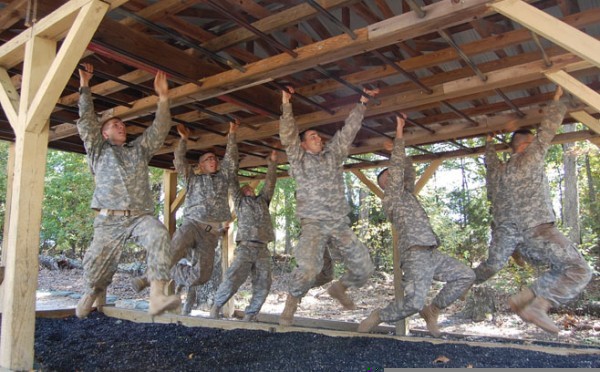 “This seems like a lot of work” – Just remember, battles are frequently won or lost on the quality of intel. Your job search is no different. The more intel work you do, the more background knowledge you have of your desired position(s) and potential employer(s), the better you will do. Know your industry to the best of your ability through research. Practice being conversant about your field, your desired job, and about your desired employer in order to get the most out of your interview.
Part I: Interview or Job Fair Preparation:
Use a military skills translator and find the jobs that your skills translate to in the civilian world. Remember that these are a rough guide and not an exhaustive list. Many times your skills can translate to jobs or positions that are not seemingly aligned. This is where it is also important for you to do some research to see what it is you want to do job-wise. Research the jobs you want, the employers, and the job descriptions. Translate your experience to match where applicable.
Market yourself as broadly as possible – If you are an aircraft mechanic and only want to interview for aircraft mechanic jobs then market yourself very specifically in just that skillset. However, if you want to look at other possibilities in mechanics from auto mechanics to wind turbine mechanics to oilfield mechanics then be more broad with how you market your skills within mechanics. Highlight mechanics related skills that translate across several disciplines.
When you are preparing for a job fair and you know there will be a variety of employers, make sure to have several resumes in different formats that are industry specific. You can also have resumes on hand that are very specific to your ideal job on hand in case you are leaning to a particular specific position. HINT: keep each resume kind in a file folder that is clearly labeled so that you can quickly and easily access them when moving from employer to employer.
Resume Format – Know the correct format for your particular industry. There are on-line resources that give plenty of examples of resumes; focus more on the examples for your particular industry. For instance, an engineering firm wants a conservative resume, a graphic design firm wants something with creative flair. However, if you are applying for a government contracting position with a company such as Lockheed Martin or Boeing they will most likely have a format they want you to put your resume into. Check out this link for some industry specific examples:
Network, Network, Network – Use LinkedIn, make your profile as neat and professional as possible. Use the above pointers, such as being brief but concise.
Look for and maintain network connections with people in the fields you are looking at going into. Network with people doing the work you want to do. Do not pass up opportunities to meet with these connections in person. Take concrete steps to meet these connections, especially in person. When reaching out to a potential connection on the internet, especially on LinkedIn make sure to make your message personal, do not use the default message.
As a veteran you are given a year of LinkedIn pro. Make that happen. (Offer is good as of the writing of this article)
In your network connections make sure you have a few trusted professional connections that can review your resume, and your LinkedIn page to make sure that they are as professional as possible.
Those trusted mentors are good resources for practicing your interviewing skills with.
Network with professional organizations, groups, and clubs that have people in your industry as members.
Dress to Impress – When interviewing put your best foot forward with regards to your appearance. When interviewing for a job it is important to go with business dress, a suit or at minimum; slacks, button down shirt, and a tie. Vests can be worn as well but try to keep your overall appearance conservative. That bright red silk shirt might be great but keep it for another occasion. If you need to appear in uniform ensure that your uniform is impeccable. ACUs are never acceptable for an interview or when meeting employers at a job fair. The exception to this would be if there is a job/career fair that is brought to your (military) location during duty hours and it is understood that everyone will be in ACUs.
These tips and suggestions should help you move toward landing the job you are looking for and starting on an exciting new career.
Make sure you bookmark this site and come back for parts 2 and 3 where we will continue with social media and interview tips and suggestions.
~ Article by Tobin Pilotte, Directer of Marketing and Technology for Forward March Inc.

 Forward March Inc. - News and Events